
Forestry mulching, tallow and yaupon removal, and pad-ready site prep across Baytown and both counties — quotes free and itemized.
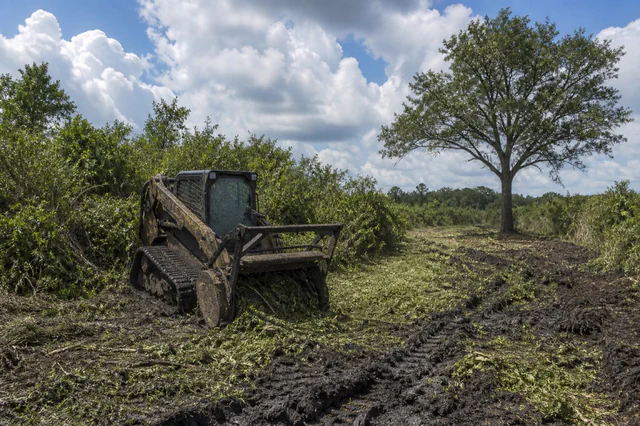
Texas treats outdoor burning as prohibited unless a specific exception applies, and inside Baytown and the built-up parts of both counties even those exceptions rarely help. A mulcher turns the same brush into ground cover with zero smoke and zero waiting.
TCEQ · 30 TAC Chapter 111This is pipeline country. State law requires an 811 locate request at least two working days before excavation, and grubbing roots out of a right-of-way corridor without one is how bad days happen. Utility marks go down before any bucket does.
Texas Utilities Code Ch. 251Nearly sixty inches of rain lands on clay that barely absorbs it. Floodplain development permits, silt fencing, and honest grade work aren't red tape here — they're the difference between a cleared lot and a retention pond you didn't order.
Harris & Chambers Co. floodplain rules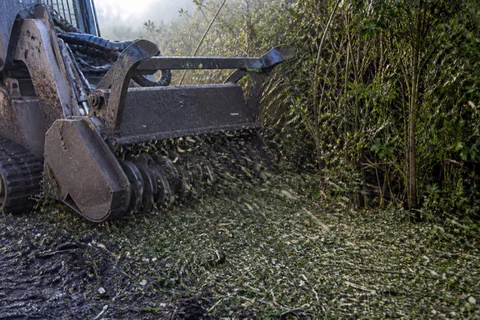
A drum mulcher grinds yaupon, tallow, and small timber into ground cover in a single pass — no burn pile, no haul-off, no bare clay left to wash.
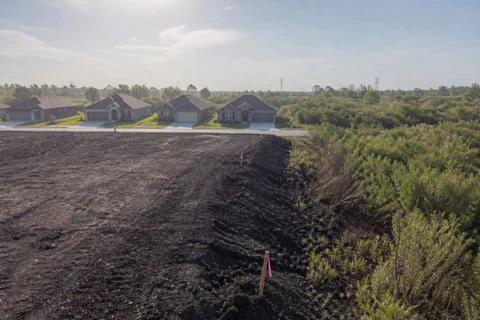
Vacant lots in Baytown and the fast-growing towns around it taken from overgrown to build-ready — trees down, roots out, pad area clean.
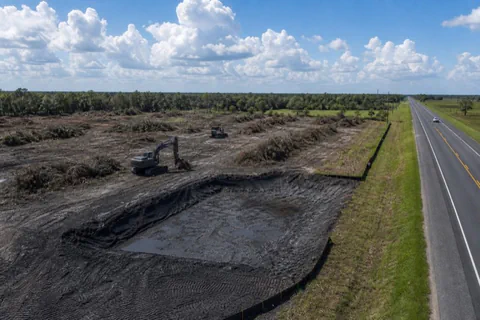
Multi-acre clearing for commercial pads, yards, and developments — stormwater controls in first, schedules kept, spoil handled at scale.
| Full acre, cleared | $810–$5,870 |
| Lightly wooded ground, per acre | $580–$2,100 |
| Heavily wooded ground, per acre | $3,300–$5,600 |
| Forestry mulching, per acre | ~$450 |
| Brush-only clearing, per acre | $330–$630 |
| Stump removal, per stump | $130–$350 |
Tallow density, soggy gumbo, and gate width decide where a Baytown job lands inside those spreads. The number that matters is the written one for your tract — free, line by line, no strings.
Get My Tract PricedBoots on the ground before machines: what stays, what goes, where the soft clay hides, and how the equipment gets in.
Property corners, keeper oaks, utility locates, and the silt fence line get marked while everything is still standing.
Mulcher for the brush and tallow, grapple and grubbing bucket where roots have to come out — matched to what the tract needs.
Pads shaped, fill placed and compacted, water routed off the clay — checked against the itemized quote before anyone calls it done.
Trinity Bay Land Clearing connects Baytown-area property owners with a local land clearing contractor equipped for gumbo country: drum mulchers that shred yaupon and invasive Chinese tallow where they stand, root rakes and grubbing buckets for mesquite on the higher pastures, grapple trucks for hurricane debris, and grade work that respects how slowly this black clay lets go of water. From ship-channel lots in Channelview to rice-prairie acreage past Mont Belvieu, every request comes back the same way — a free, written, itemized quote.
Tell us what's standing on the land — a local land clearing contractor replies with itemized numbers.
Two counties of bayou country, drawn not to scale
The honest answer is that the vegetation decides. Lawn Love's 2026 national guide puts a full acre anywhere between $810 and $5,870 — light growth toward the bottom, dense timber toward the top — with forestry mulching averaging around $450 an acre. Around Baytown, tallow density, wet gumbo clay, and gate access push a job up or down inside that spread, so every request through this site is answered with a written, itemized number for your specific tract.
Usually not, and almost never conveniently. Outdoor burning in Texas falls under the TCEQ's Outdoor Burning Rule, which prohibits it except under narrow exceptions, and Baytown city limits plus most of the surrounding populated areas take even those off the table. That's the practical case for mulching: the same brush gets ground into cover where it stood, and nobody is watching a smoke column or waiting on a burn ban to lift.
It's a fast-spreading invasive tree that has taken over huge stretches of Gulf-coast prairie — TexasInvasives.org ranks it among the region's worst invaders. Left alone for a few seasons, a fence line or vacant lot east of Houston turns into a tallow thicket. Clearing it means cutting or grubbing the trees and dealing with the root systems, because tallow stumps resprout aggressively if they're simply topped.
Completely. The gumbo clay under most of Harris and Chambers counties turns greasy when wet — machines rut it badly, and a lot torn up in the wrong week stays scarred. Contractors here plan around soil moisture, run tracked machines to spread the weight, and use mulch cover to protect the surface. It's also why grading and drainage get discussed on nearly every quote: gumbo holds water where it's left low.
Mulching grinds brush and small trees at the surface and leaves the roots holding the soil — right for overgrown acreage, fence lines, and keeping land open. Dozer and excavator work pulls roots and organics out entirely, which is what a house pad or commercial site requires before fill and compaction. Many Baytown jobs pair the two: mulch the bulk of the tract, grub only where something will be built.
Trinity Bay Land Clearing is an independent local marketing site for one trade in one corner of Texas. When you call or send the form, the request goes to a local land clearing contractor who covers the Baytown area. That contractor walks the property, writes the itemized quote, and does the work — the estimate costs nothing and you're never obligated to accept it.